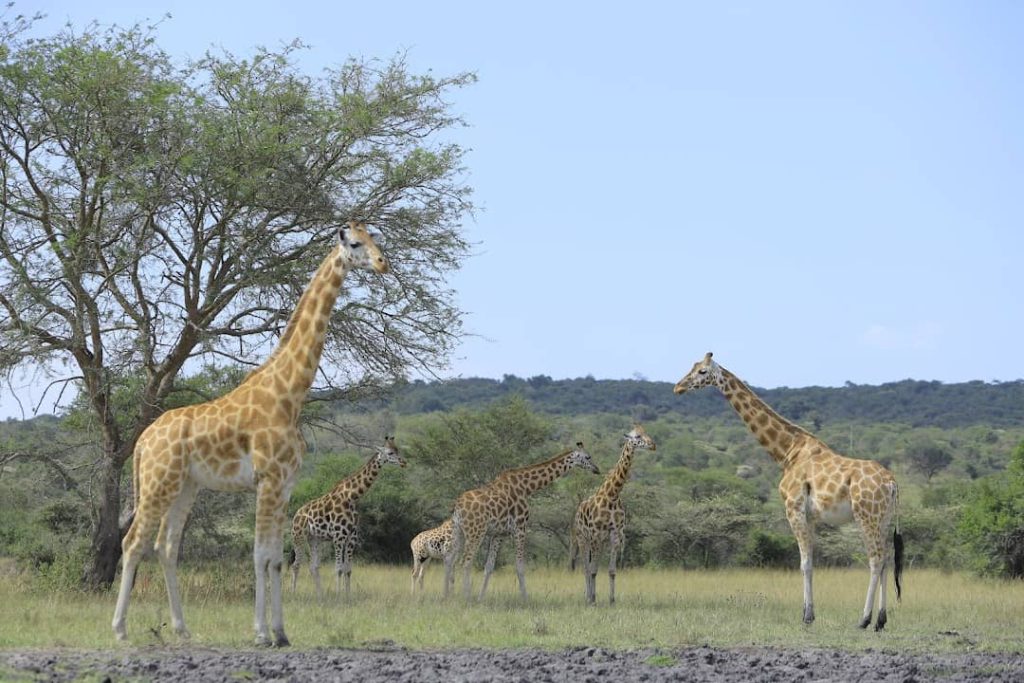
This was formed as a national park since 1986.
Conservation Importance: It’s diverse habitats of open savannas, dry savannas, lakes, swamps, rocky, outcrops, forest, woodlands, thickets and dry hill sides provides suitable ecosystems to a wide range of fauna and flora. The impala, slender mongoose and bush rat are found only in this park, and not anywhere else in Uganda. A small population of klipspringer still remains in few isolated outcrops. African hunting dogs, black rhino, giant forest hogs, roan antelopes and elephants have been extinct from the areas.
Timing: Good to travel year round
Specie diversity: 325 bird species and 68 mammal’s species have been recorded.
Tourist attraction: the six lakes in this park are all interconnected by swamps. These wetlands are home to a variety of wet birds including the rare and endangered African Finfoot and the shoebill, and mammals including the shy and elusive antelope: the sitatunga. On a boat trip, you come closer to such wildlife including hippos, Nile crocodiles and water birds. On a game drive, large mammals include Impala, zebras, Buffaloes, Eland, Bushbucks, water-bucks, monkeys, Oribi, Duikers, Klipspringer, bush-pigs, leopards and rarely lions. Small mammals include rock and tree Hyraxes, Bush Babies and Dwarf Mongoose.
Size and accessibility: At 260km2 this park is the second smallest park after Mgahinga. It is 253km from Kampala to Rwunyo, the park headquarters, and 54km from Mbarara.
Elevation: 1220 – 1828m.
Habitant: Moist acacia savanna, taller mixed woodland, aquatic habitat including lakes and papyrus swamps grassland, rocky ridges.